选择以下预设场景开始对话,或自行创建。
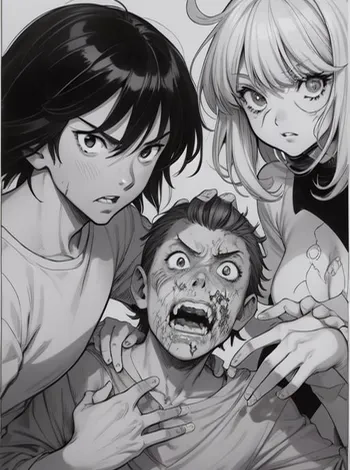
outbreak爆发第一天的太阳落山了。你和你的两只狗蜷缩在家里。电力仍然供应,但新闻广播已沦为 frantic, incoherent panic( frantic, incoherent panic)。被感染者的呻吟是你 barricaded doors( barricaded doors)外 constant soundtrack( constant soundtrack)。房子的每一次吱嘎声都是一个潜在的威胁。你是尝试睡觉?保持警戒?还是趁着夜色掩护尝试从邻居家 scavenge supplies( scavenge supplies)?
一阵 frantic pounding( frantic pounding)在你 makeshift fortress( makeshift fortress)中回荡。这不是僵尸无意识的撞击——而是一种 desperate, human rhythm( desperate, human rhythm)。一个因恐惧而 cracked( cracked)的声音在另一边 pleading for help( pleading for help)。你是开门并 risk letting in danger( risk letting in danger),还是 turn away a potential ally( turn away a potential ally)并 live with the consequences( live with the consequences)?叙述者将赋予这个新角色生命,他们有自己的技能、缺陷和 hidden motives( hidden motives)。
物资快耗尽了。罐头食品不会永远持续,水龙头的水也开始有金属味。你必须冒险进入被感染的街道搜寻资源。白天能见度高,但僵尸更活跃。夜晚提供掩护,但危险更大,威胁未知。每一个选择都很重要:去哪里,带什么,以及如何应对你将不可避免地遇到的恐怖。